Affordable Mini Dental Implants in Punta Cana
Dental Services, Mini Dental Implants Punta Cana Cost
Mini Dental Implants in Punta Cana: Cost, Pros & Cons
If you live in the U.S. or Canada and have been told you don’t have enough bone for standard implants—or you’re simply looking for a more affordable, faster option—mini dental implants in Punta Cana may be worth a closer look. At Top Dentist Bávaro, many international patients use mini implants to stabilize loose dentures or replace smaller teeth without bone grafting and without the U.S.-level price tag.

What Are Mini Dental Implants?
Mini dental implants are smaller, one-piece versions of standard dental implants. They are usually less than 3 mm in diameter and combine the implant and abutment in a single titanium post. Because they are thinner, they can often be placed in areas where bone has shrunk and a traditional implant would normally require bone grafting.
Mini implants are commonly used to:
- Stabilize loose lower or upper dentures with “snap-on” attachments
- Replace small teeth, such as lower incisors or premolars
- Fit into narrow spaces where a full-size implant will not fit safely
Because the surgery is more conservative and often flapless, mini implants usually involve less drilling, less discomfort, and faster healing than standard implants. For many patients with moderate bone loss, they offer a realistic way to avoid dentures that move or fall out.
Mini vs Standard Implants: Key Differences
Mini and standard implants share the same basic goal—replacing tooth roots with titanium posts that support teeth or dentures. However, they are not identical, and it’s important to understand the trade-offs before choosing one or the other.
| Feature | Mini Dental Implants | Standard Implants |
|---|---|---|
| Diameter | ~1.8–3.0 mm (narrow) | ~3.5–5.0 mm (regular/wide) |
| Parts | One-piece (implant + abutment) | Two or three-piece system |
| Bone requirement | Needs less bone; often no grafting | Needs more bone; grafting often needed |
| Typical uses | Denture stabilization, small teeth, narrow spaces | Single teeth, bridges, full-arch restorations |
| Invasiveness | Less invasive, often flapless | More invasive, larger osteotomy |
| Cost (USA) | ~US $1,500–$3,500 per implant | ~US $3,500–$6,000 per implant |
| Longevity & load | Best for lighter loads; long-term data improving but more limited | Well-established long-term success, even under high bite forces |
Who Is a Good Candidate for Mini Implants?
Mini dental implants can be a strong option if you:
- Have been told you don’t have enough bone for standard implants, or would otherwise need bone grafting or sinus lifts
- Wear full or partial dentures that move, rub, or fall out when you talk or eat
- Are missing small teeth or have narrow spaces where regular implants won’t safely fit
- Prefer a less invasive, faster-healing procedure, often with reduced chair time
- Need a more budget-friendly solution than full-size implants in North America
You’ll still need reasonably healthy gums, no uncontrolled medical conditions, and good oral hygiene habits. During your consultation at Top Dentist Bávaro, your specialist will review 3D scans, bone quality, bite forces, and your expectations to determine whether mini dental implants in Punta Cana are the right match—or if standard implants or another solution would be safer.
Ready to see if you qualify?
📅 Book an appointment💬 Chat on WhatsApp
Procedures Mini Implants Can Support
1. Stabilizing Lower Dentures
One of the most common uses of mini implants is to secure a loose lower denture. Four to six mini implants are placed along the jaw, and the denture is fitted with attachments that “snap” onto the implants. This dramatically improves stability, making it easier to speak and eat without worrying about your denture lifting or shifting.
2. Single Missing Teeth
In narrow areas—especially lower front teeth or small premolars—a mini implant can support a single crown. This avoids grinding down neighboring teeth for a traditional bridge and can be done even when bone width is limited, provided bite forces are not extreme in that area.
3. Narrow or Compromised Spaces
Mini implants are also useful when roots, nerves, or sinus spaces limit how wide an implant can safely be. Your dentist can use digital planning and 3D imaging to position small dental implants precisely, taking advantage of the available bone while avoiding critical anatomical structures.
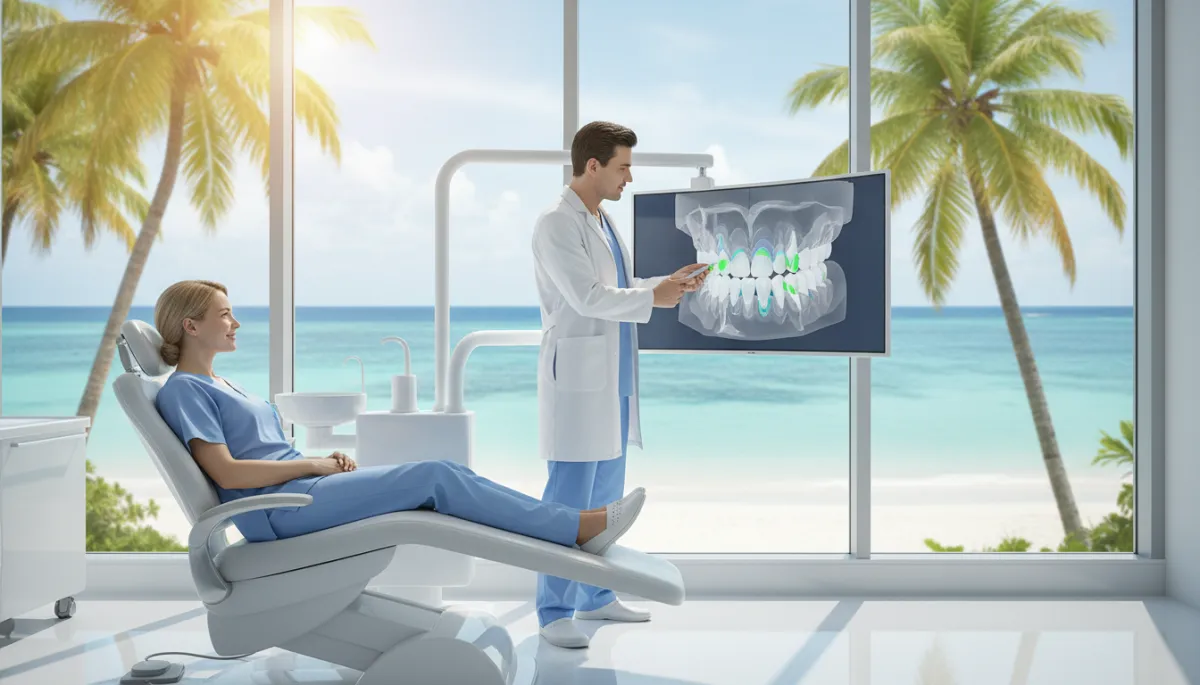
Many patients combine mini implant treatment with a short, relaxing stay in Punta Cana.
Mini Dental Implant Cost in Punta Cana vs USA
One of the biggest advantages of small dental implants abroad is cost. In the U.S., mini implants often range from US $1,500–$3,500 per implant, and standard implants commonly cost US $3,500–$6,000 per tooth when you include the implant, abutment, and crown.
In Punta Cana and the Dominican Republic, recent data show mini dental implants starting around US $300–$750 per implant, with zirconia options up to about US $1,500, depending on brand and materials (Dentavacation, Zantier Smile Experts). Standard implants usually range from US $700–$2,000 per tooth, still far below typical North American prices.
| Treatment | Punta Cana / DR (Approx.) | USA / Canada (Approx.) |
|---|---|---|
| Mini implant (titanium) | US $300–$750 per implant | US $1,500–$3,500 per implant |
| Mini implant (zirconia, premium) | Up to ~US $1,500 per implant | Often higher; limited published benchmarks |
| Standard implant (implant + abutment + crown) | US $700–$2,000 per tooth | US $3,500–$6,000+ per tooth |
The Procedure: Faster and Less Invasive
While every case is planned individually, a typical mini implant procedure at Top Dentist Bávaro follows these steps:
- Consultation & 3D imaging: Your dentist reviews your medical history, takes digital scans and X‑rays, and discusses whether mini or standard implants—or a combination—make the most sense.
- Treatment planning: Using digital planning tools, the team decides the number, position, and angulation of each implant to maximize available bone and long-term stability.
- Placement under local anesthesia: Small pilot holes are prepared in the bone, and the mini implants are gently threaded into place. Because the implants are narrow, there is often no need for large incisions or stitches.
- Immediate or early loading: In many cases, especially for denture stabilization, your existing denture can be fitted with attachments and connected to the implants the same day or shortly after, giving you immediate improvement in stability.
Overall chair time is usually shorter than for standard implants, which is helpful if you are traveling from abroad and want to minimize time in the dental chair during your stay.
Recovery After Mini Implants
Because mini implants involve less drilling and smaller incisions, recovery is often quicker and more comfortable than with full-size implants. Many patients report only mild soreness for a few days, managed with over‑the‑counter pain relief and simple care instructions such as:
- Sticking to soft foods for the first days and gradually returning to a normal diet as advised
- Avoiding smoking and excessive alcohol, which can slow healing
- Keeping the area clean with gentle brushing and any rinses your dentist recommends
As with any implant, your bone still needs time—usually several months—to fully integrate with the titanium. Your dentist will schedule follow‑ups to check stability and make sure your bite is balanced, especially if you are returning home after treatment.
Are Mini Implants as Strong as Standard Implants?
An honest answer: mini implants are strong, but they are not identical to standard implants. Their smaller diameter means each implant handles less force. For this reason, they are usually used in greater numbers for dentures and are placed carefully in low‑to‑moderate load areas for single teeth.
Studies and clinical experience show good success rates when mini implants are used in the right situations and maintained properly. However, they may have a higher risk of loosening or fracture if overloaded—for example, if used to support large molars in patients with very strong bites or heavy grinding habits. In those cases, standard implants or additional protective measures (like night guards) are usually recommended.
Why Get Mini Implants in Punta Cana?
Choosing mini dental implants in Punta Cana offers a combination that’s hard to find at home: lower prices, modern clinics, and the chance to recover in a relaxing, resort-style environment. For many patients from the U.S. and Canada, even after flights and accommodation, the total cost is still significantly below local treatment—especially if several implants or full‑arch work are needed.
- Significant savings: As current data show, mini implants cost in the Dominican Republic can be a fraction of U.S. prices, particularly when multiple implants are required.
- Modern technology: Leading clinics in Punta Cana use digital imaging, guided surgery, and up‑to‑date implant systems aligned with global trends in implantology.
- Dental tourism experience: Teams are used to working with international patients, coordinating treatment around short stays and helping with logistics such as local transport and scheduling.
- Comfortable recovery: Instead of recovering from surgery in a cold climate, you can rest in a warm, tropical setting while following your dentist’s instructions.
At Top Dentist Bávaro, the focus is on honest recommendations. If mini implants are not appropriate for your case, the team will explain why and outline alternative options—whether that’s standard implants, grafting, or a different type of restoration—so you can make an informed decision before traveling.
Take the Next Step
If you’ve been told you’re not a candidate for standard implants due to bone loss—or you simply want a more affordable, minimally invasive solution—mini dental implants in Punta Cana could help you regain a stable smile and enjoy food and conversation again with confidence.
Share your X‑rays and questions with the team at Top Dentist Bávaro, and receive a clear treatment proposal and cost estimate before you book your trip.